
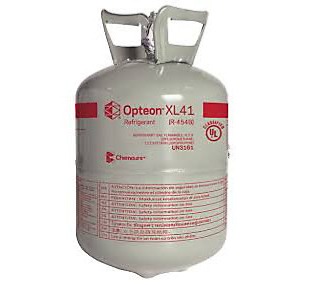
At Beacon Services & Appliances, we’re committed to staying ahead of industry changes so we can continue to provide the best solutions for our customers. One of the biggest changes coming to the HVAC world in 2025 is the phaseout of R-410A refrigerant and the transition to a more environmentally friendly alternative: R-454B. This new refrigerant isn’t just a regulatory shift—it’s a step forward in safety, efficiency, and sustainability for residential heating and cooling systems.
What Is R-454B?
R-454B, also known under the trade name Opteon™ XL41, is a next-generation refrigerant developed to replace R-410A. It has a Global Warming Potential (GWP) of 466, which is about 78% lower than R-410A’s GWP of 2,088. This makes R-454B a significantly greener option, aligning with the U.S. Environmental Protection Agency’s (EPA) upcoming mandate to reduce emissions from hydrofluorocarbon (HFC) refrigerants.
R-454B is classified as A2L, which means it is mildly flammable, but it’s important to note that it has been extensively tested and approved under strict safety standards. When installed and serviced by trained professionals—like our certified technicians at Beacon Services & Appliances—R-454B systems are safe and reliable for home use. The refrigerant is already being used in several countries around the world and is supported by major HVAC manufacturers, many of whom are already designing equipment specifically for it.
Why Is This Change Happening?
The shift away from R-410A is part of a global effort to reduce the environmental impact of HVAC systems. While R-410A was a significant improvement over its predecessors (like R-22), it still contributes to greenhouse gas emissions. R-454B offers a more sustainable solution without sacrificing the performance homeowners expect from their air conditioning and heat pump systems.
Benefits of R-454B for Homeowners
- Lower Environmental Impact: Its low GWP helps reduce your home’s carbon footprint.
- Higher Efficiency Potential: Systems designed for R-454B are being optimized for better energy use, which may lead to lower utility bills.
- Regulatory Compliance: Starting in 2025, new systems will need to use approved low-GWP refrigerants—choosing R-454B now means you’re ahead of the curve.
- Support from Major Manufacturers: Companies like Carrier, Lennox, and Trane are building new equipment lines around R-454B, ensuring parts and support will be widely available.
- Safe for Residential Use: With proper handling and installation, R-454B systems are just as safe as any other HVAC solution, meeting rigorous safety guidelines set by the industry.
Understanding R-454B: A Safer, Greener Future in Refrigerants
As the HVAC industry moves toward more eco-conscious solutions, two new refrigerants—R-454B and R-32—are stepping in to replace R-410A in residential air conditioning systems. Both offer significant environmental benefits, especially with much lower Global Warming Potential (GWP) compared to their predecessor. However, like all innovations, these refrigerants come with a tradeoff: mild flammability.
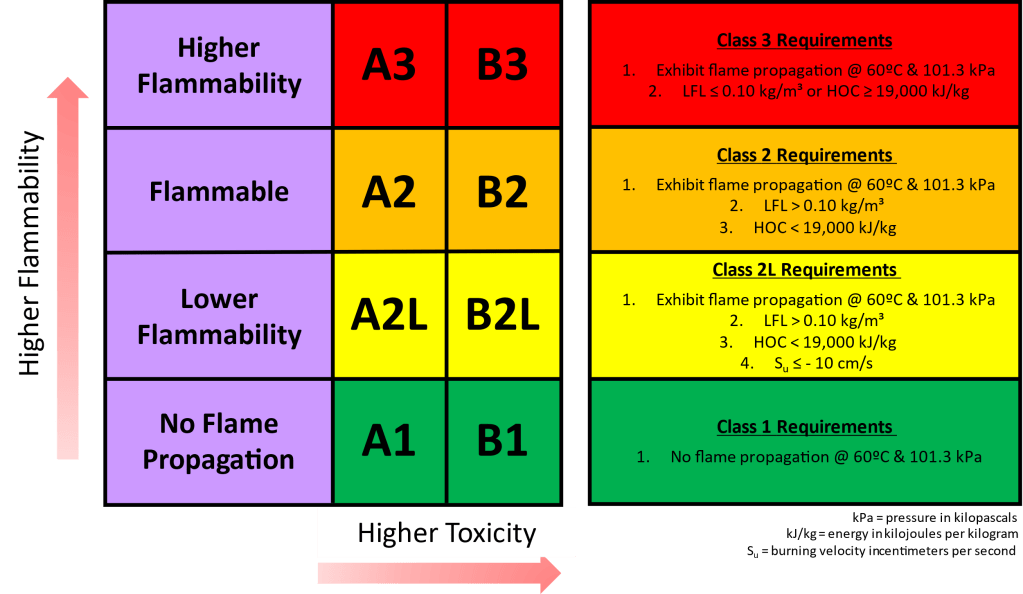
So, how concerned should you be? The truth is, all refrigerants are flammable to some degree—what varies is how easily they ignite. To help classify this, the American Society of Heating, Refrigerating and Air-Conditioning Engineers (ASHRAE) developed a scale that measures both toxicity (A or B) and flammability (1 through 3). R-410A, for example, is rated A1—meaning it has low toxicity and is non-flammable. In contrast, R-454B and R-32 are rated A2L, meaning they have the same low toxicity but are considered mildly flammable.
To put this in perspective, an A2L-rated refrigerant like R-454B only ignites under very specific conditions, such as a high concentration in a confined space with a direct ignition source. In fact, studies and demonstrations—including those by the ESCO Institute—have shown that A2L refrigerants are only slightly more flammable than A1 types and pose minimal risk when installed and handled properly. At Beacon Services & Appliances, our technicians have received specialized training to ensure that these new systems are installed with maximum safety and compliance.”
Here is a detailed video from the ESCO Institute that helps put the safety into perspective: Are Refrigerants Flammable?
Figure 1: ASHRAE Refrigerant Safety Group Classification3
What the Transition Means for You as a Homeowner
One important thing to understand is that existing air conditioning systems cannot be retrofitted to use R-454B or R-32. Because these new refrigerants require specific components and system designs, manufacturers have had to redesign equipment from the ground up. Naturally, these redesigns come with added costs—so yes, new HVAC units in 2025 will likely cost more than comparable models from 2024, with estimates showing a price increase of around 15%.
Do You Need to Upgrade Right Away?
No. You are not required to replace your current system if it uses R-410A. You can continue to use and maintain it for as long as it remains in good working condition. In fact, manufacturers were allowed to produce R-410A systems through the end of 2024, and those systems can still be installed until January 1, 2026—as long as inventory is available.
However, supply may run out sooner than expected. Many manufacturers began phasing down production well before the cutoff to avoid excess stock. Additionally, extreme weather events like Hurricanes Helene and Milton in 2024 accelerated demand in certain regions, especially in the southern U.S., further depleting the remaining inventory. Based on current projections, most R-410A equipment could be sold out by the end of Q1 2025.
Rest assured, Beacon Services & Appliances will continue to service, repair, and maintain R-410A systems, including recharging them with refrigerant when available. But it’s worth noting that as production decreases, some components and refrigerant may become harder to find.
Our Recommendation: When to Upgrade Your AC System
If your current system is 10+ years old, now might be the ideal time to consider a replacement with an R-410A unit—while supplies last. Here’s why:
- 💲 Cost Savings: R-410A systems are about 15% less expensive than the newly designed units using R-454B or R-32.
- ✔️ Proven Performance: R-410A is a reliable, time-tested refrigerant, and many homeowners feel confident sticking with what’s familiar.
- 🔧 Better Efficiency: Even a new R-410A system will offer improved energy efficiency and reliability over older models.
If your system is under 10 years old and working well, there’s no need to rush. Keep up with regular maintenance and plan for a future upgrade only when it’s needed. By then, the industry will have had more time to refine systems using R-454B and R-32, and you’ll benefit from any advancements made along the way.
On the other hand, if you’re ready for a new system and excited about reducing your environmental impact, we’re ready to help. Beacon Services & Appliances offers the latest R-454B-compatible systems and R-32 mini splits, installed safely and professionally by our expert team.
Ready to Learn More?
If you have questions about how the new refrigerant standards apply to your home or business, give us a call or stop by Beacon Services & Appliances. We’re here to help you make a smooth and confident transition into the next generation of home comfort. Call us today at 352-726-7530 or visit our website at www.BeaconSaves.com.
Categories: air conditioning
 www.BeaconSaves.com
 Beacon Services & Appliances | Beacon Air & Heat, Inc.